.png "Monthly Memo for April 2026 includes...")

In 1893, what kind of fish did the state of Oregon begin stocking in Oswego Lake?
Stay tuned to the end of the newsletter to find out more!

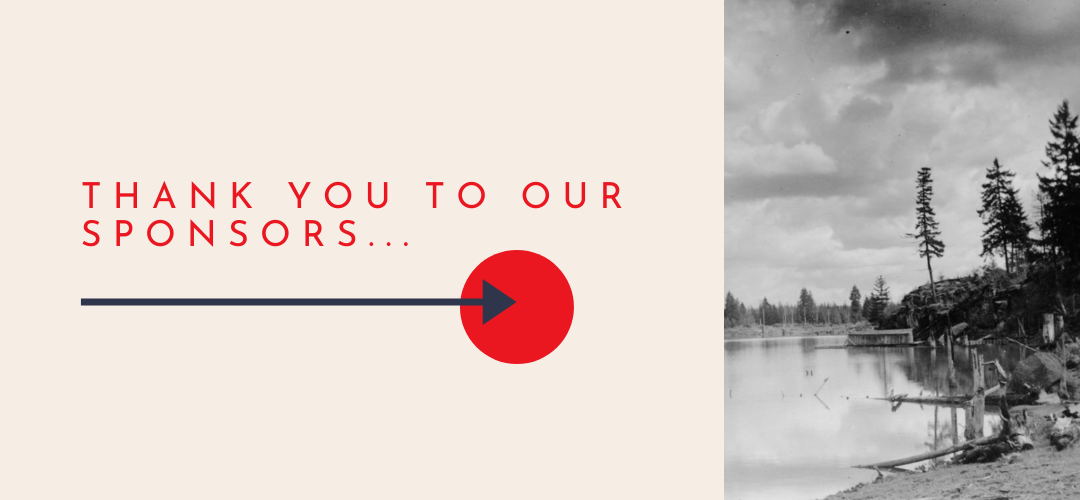
Fishing has long been apart of Lake Oswego history! In fact, you may know that the original settler name for the lake was "Sucker Lake." This wasn't because of foolish people but rather an abundant fish in the lake: suckerfish.
BONUS QUESTION: Do you know the most common species of suckers in our area?

We've had a busy, busy month! With a new donation from the descendents of the Shipley family, we've been going through hundreds of photographs, letters, and more! These items entwine with Lake Oswego history in exciting ways, and there will be far more to see. We've spotlighted a few items in the "From the Archives" bit below.
But there's a reason we've been reaching out to people and organizations about photographs (and are incredibly grateful to those who have helped with this)! This year, we're working on a major project in honor of the 250th anniversary of the United States—a new pictorial history book of Lake Oswego. We've had volunteers pouring over the thousands of images and ephemera in our collection and collections elsewhere in Lake Oswego.
This book will tell the story of our community, largely through images, in an elevated "coffee table" style. It's the kind of publication we haven't put out in over 20 years, and our members will get the first sneak peak at it in the coming months.
Not a member but interested in joining? Learn more by clicking on the button below!
Kathryn Sinor
Executive Director

WE STILL HAVE HISTORIC PRINTS LEFT!
(Including some new smaller prints)
Do you love our historic photographs? Wish you had some of your own to decorate your home or business? Well, we've got you!!!
Stop by the Heritage House during open hours (M, W, Th, Fri from 10:00 AM - 3:00 PM) to grab some FREE PHOTO PRINTS! These are all historic images of Oswego! The originals are kept in our collection, but we're clearing out space so take as many of the prints as you'd like FOR FREE.
These will be available until April 2nd.

CARS! BOATS! MOTORCYCLES! BICYCLES! Our show is growing, and you can be part of it. Join us on Sunday, August 30th, as a sponsor of this long-standing community event!
Sponsorship levels range from $150 to $3,000 and include all sorts of benefits, including:
 Getting in front of thousands of people
- Recognition at the event and in marketing at varying levels
- Sponsor-themed award, selected by and given out by the sponsor at the show
- A booth for your business for higher level sponsors
- And so much more!
All proceeds from this event go towards helping Oswego Heritage Council fulfill its mission of preserving and promoting local history.

FROM OUR NEW DONATION...

In September 1945, Lt. Kenneth Shipley mailed this airmail letter to his wife and newborn son in Oswego, Oregon. After speaking to the family, our guess is that he had yet to meet his new son, as he gets the baby's name wrong on the envelope. The stamp and the fleet post office return address place him somewhere in the Pacific, written during wartime restrictions that shaped every letter he sent home.
Nonetheless, Shipley wrote to his infant son with humor, tenderness, and the everyday parenting that continued even from half a world away:
“What’s this about bumping your head against the crib? Don’t you know that will worry your mother and worry will cause her to be unhappy. Just tease her a little, for I know how she likes that extra hours sleep. You be a good boy or else she won’t let me take you hunting with me. From now on wake up early, its good for you, then cheerily say “ good morning mother”, and if she just grunts in response, well then amuse yourself until she wakes up.”
Shipley’s letter to family reveals a man trying to stay present in his family’s life through words alone, carrying the rhythms of home with him as the war slowly drew to a close. His letter imagines the small dramas of home—early mornings, a mother stretched thin—while trying to guide a child he can’t yet hold.

Among the letters sent home were photographs of men Shipley served with, including notes on each. On the back of one photo, Shipley writes about Malone and Sworfact, two “good workers” and promising ballplayers. He notes Malone’s three singles and jokes about his build.
Even during wartime, baseball remained a thread of normalcy. Recreation was essential aboard ships and bases. Baseball leagues were common, giving servicemen a sense of routine and camaraderie.

One of the most common questions we get in the archives is about historic property research. We know how overwhelming this process can be! Many of these records are scattered, and it can be difficult to know where to turn. There are steps you can take to gather information and uncover some of the details before approaching the Oswego Heritage Council.
To help get you started, we've compiled a list of resources for collecting records (both digital and in person) and finding out who lived in the house. This webpage will be updated regularly as we compile new resources and better organize information.

Interested in being a museum docent? Want to volunteer to help the Oswego Heritage House open for additional hours?
Come to our DOCENT TRAINING on Saturday, April 4th, from 10:00 AM - 12:00 PM. You'll discover behind-the-scenes of our new exhibit, learn how to guide guests, and get an understanding of the logistics it takes to be a museum docent.


|
JOIN US ON WEDNESDAY, APRIL 1ST, AT 5:30 PM FOR THE LAKE OSWEGO READS TOPIC
Earthquakes are not really common in the Pacific Northwest, but when they happen, they can be very large and very destructive. Dr. Burns will talk about how the geology of the Pacific Northwest is exciting and also sometimes dangerous to humans. One of those dangers are the subduction earthquakes which can be very destructive. How do we prepare for them?
Scott Burns is a professor emeritus of engineering geology and past-chair of the Department of Geology at Portland State University (PSU). Over more than 50 years of teaching, Scott has received teaching awards from numerous universities. He specializes in environmental and engineering geology, geomorphology, soils, and quaternary geology, and is a frequent speaker on landslides, earthquakes, floods, volcanoes, radon, and tsunamis, the National Parks, and the relationship between soils, climate, grapes, and wine. Scott is a sixth-generation Oregonian who grew up in Beaverton and actively helps local TV, radio stations, and newspapers bring important geological news to the public.
|
|
INTERESTED IN THIS SEASON'S CHAUTAUQUA LINE-UP?
April 1st: Living on Cascadia: Are We Ready for the Big One? by Professor Scott Burns
May 6th: Porch Time: Home Life and Leisure in the Early 20th Century by Kay Demlow
|
Did you guess what kind of fish the state of Oregon began stocking in Oswego Lake in 1893?
TROUT, SALMON, STEELHEAD, BASS, AND CATFISH

BUT WHAT ABOUT THE SUCKERS?
Suckers aren't referring to any of these fish. They aren't even referring to lamprey eels. Instead, the most common species of suckers in our area is the Largescale Sucker (Catostomus macrocheilus), which can grow up to 24 inches long and live as long as 15 years.
And if you're wondering if they still exist here, Lake Oswego historian Susanna Kuo got confirmation of that fact just the other day. The bottom feeding fish spawned early this year and could be found at the mouth of Oswego Creek.
Thanks to Susanna Kuo for providing some important details and images of our wonderfully misunderstood suckers!